

Single Dad Support in Texas: The Complete Guide to Resources, Community, and Thriving as a Father
- Aaron Nolan
- 3 days ago
- 13 min read

Being a single dad in Texas is one of the most rewarding and demanding roles a man can have. Every day brings a new challenge. You might be getting your children ready for school before sunrise, working a full-time job, rushing to pick them up in the afternoon, helping with homework, making dinner, handling bedtime routines, and somehow finding the energy to do it all again the next morning.

For many fathers, there isn't another adult at home to share the load. Every decision, every bill, every doctor's appointment, every school event, and every late-night worry rests on your shoulders.
If you're searching for single dad support in Texas, you've already taken one of the hardest steps: recognizing that you don't have to do everything alone.
Whether you're recently divorced, separated, widowed, raising your children full-time, sharing custody, or unexpectedly navigating fatherhood on your own, there are resources, communities, and other fathers ready to help. More importantly, there are thousands of dads across Texas facing many of the same struggles you are.
This guide explores the challenges single fathers experience, practical ways to overcome them, and how building a support network can make a lasting difference for both you and your children.
The Reality of Being a Single Dad in Texas
Texas is home to millions of families, and a growing number are led by fathers raising children on their own. While every family looks different, many single dads in Texas experience similar obstacles.
Financial responsibility often becomes heavier after separation or divorce. Housing costs continue to rise, groceries become more expensive, childcare can consume a significant portion of a paycheck, and unexpected expenses always seem to arrive at the worst possible time.
Beyond finances, there is another challenge that receives far less attention: isolation.
Many fathers lose part of their social circle after divorce. Friends become busy with their own families. Invitations become less frequent. Conversations become shorter. Before long, many dads find themselves spending nearly all of their time working or parenting with very little opportunity to connect with other adults.
That isolation doesn't mean you're failing. It means you're carrying responsibilities that few people truly understand.
Why Support Matters
Support isn't about weakness.
Support is about sustainability.
Imagine trying to build a house by yourself. You could probably lay the foundation, frame the walls, install the roof, wire the electrical system, paint every room, and finish the landscaping. Eventually, though, exhaustion would catch up with you.
Fatherhood works the same way.
Every dad needs encouragement.
Every dad needs advice.
Every dad benefits from hearing someone say,
"I've been where you are."
One conversation with another father who's walked a similar path can change everything. Sometimes you don't need someone to solve your problems. You simply need someone who understands them.
Common Challenges Single Fathers Face
Every father's situation is unique, but many challenges appear again and again.
Financial Pressure
Providing for children while maintaining a household often means stretching every dollar.
Some fathers work overtime. Others juggle multiple jobs. Many sacrifice their own needs so their children never notice the struggle.
Financial stress doesn't just affect bank accounts. It affects sleep, relationships, health, and emotional well-being.
Creating a realistic budget, building an emergency fund over time, and connecting with local assistance programs when needed are all signs of responsible parenting, not failure.
Emotional Burnout
Burnout rarely happens overnight.
It builds slowly through months or years of constant responsibility.
You may notice yourself becoming:
More irritable
Constantly tired
Less patient
Emotionally numb
Easily overwhelmed
Less interested in hobbies
Unable to relax even when your children aren't home
Many fathers assume these feelings are simply part of parenting.
They aren't.
Burnout deserves attention before it develops into anxiety, depression, or serious health concerns.
Parenting Without a Playbook
No father receives an instruction manual.
Every child is different.
Every custody arrangement is different.
Every family dynamic changes over time.
Some days you'll make the right decision.
Other days you'll wonder if you handled everything wrong.
Your children don't expect perfection.
They remember consistency.
They remember feeling safe.
They remember knowing Dad showed up.
Being emotionally available often matters more than having all the answers.
Building a Strong Support System
One of the greatest investments you can make isn't financial.
It's relational.
Support can come from many places:
Other single fathers
Family members
Faith communities
Parenting groups
Trusted coworkers
Coaches
Mentors
Professional counselors
Having just one dependable person you can call during difficult moments can reduce stress dramatically.
Many fathers hesitate to ask for help because they believe they should already know what they're doing.
The truth is that every experienced father once stood exactly where you are now.
Finding Community in Texas
Texas is a big state filled with fathers who understand the challenges of raising children on their own.
Whether you live in Houston, Dallas, Fort Worth, Austin, San Antonio, El Paso, Lubbock, Waco, Tyler, Amarillo, Corpus Christi, Midland, Odessa, McAllen, Brownsville, College Station, Abilene, or a small rural town, you are not the only dad navigating this journey.
The internet has made it easier than ever to connect with fathers who share similar experiences. Online communities, local organizations, and fatherhood groups provide opportunities to ask questions, share victories, and encourage one another.
At Provide Or Die, we believe one conversation between two dads can have a greater impact than dozens of generic articles. Real support comes from people who genuinely understand what you're experiencing.
Co-Parenting When Emotions Run High
Co-parenting isn't always easy.
Even parents who want what's best for their children may disagree about schedules, discipline, education, or communication.
Successful co-parenting doesn't require perfect agreement.
It requires consistent focus on your children's well-being.
Some practical habits include:
Keeping communication respectful
Staying organized with calendars
Avoiding arguments in front of children
Remaining flexible when appropriate
Separating personal conflict from parenting decisions
Children thrive when they feel free to love both parents without feeling caught in the middle.
Taking Care of Yourself Isn't Selfish
Many fathers place themselves last.
After work comes parenting.
After parenting comes chores.
After chores comes sleep.
Somewhere along the way, self-care disappears.
Yet maintaining your physical and mental health directly benefits your children.
Simple habits can make an enormous difference:
Regular exercise
Consistent sleep
Healthy meals
Time outdoors
Prayer or meditation
Reading
Talking with trusted friends
Taking occasional breaks
You cannot pour from an empty cup.
Taking care of yourself allows you to take better care of your children.
Managing Financial Stress as a Single Dad
Money is one of the biggest sources of stress for single fathers in Texas. Whether you're paying child support, covering childcare expenses, or trying to stretch one income across an entire household, it can feel like you're constantly trying to catch up.
The reality is that many single dads aren't struggling because they're irresponsible. They're struggling because they're carrying responsibilities that were once shared between two adults.
Financial pressure can affect nearly every part of life. It influences where you live, the schools your children attend, the activities they can participate in, and even your own physical and mental health.
Instead of trying to solve everything at once, focus on building stability one step at a time.
Start by identifying your essential monthly expenses. Housing, food, transportation, healthcare, and utilities should always come before discretionary spending. If possible, create a small emergency fund, even if you can only save a few dollars each week. Small habits often create significant long-term results.
Many fathers also benefit from connecting with community resources during difficult seasons. There is no shame in accepting temporary help while you work toward long-term stability.
Balancing Work and Fatherhood
One of the hardest parts of being a single dad is feeling like you're constantly disappointing someone.
If you're at work, you may feel guilty for missing time with your children.
If you're with your children, you may worry about work responsibilities.
That internal tug-of-war is common among single fathers.
Finding balance rarely means dividing your time equally. Instead, it means being fully present wherever you are.
When you're at work, focus on providing for your family.
When you're with your children, give them your attention instead of worrying about tomorrow's emails or next week's bills.
Children remember moments far more than schedules.
They remember laughing together, cooking dinner, playing catch, reading bedtime stories, and simply knowing Dad was there.
Navigating Texas Child Custody Cases
Child custody can be one of the most emotionally challenging aspects of single fatherhood.
Whether you're pursuing custody, sharing parenting responsibilities, or adjusting to a new visitation schedule, emotions often run high.
It's natural to feel frustrated when plans change or communication becomes difficult.
Whenever possible, keep your focus on your children rather than conflict.
Ask yourself one question before making important decisions:
"Will this help my child?"
Children benefit most when they experience consistency, stability, and love from both parents whenever it's safe and appropriate.
While disagreements are sometimes unavoidable, respectful communication and careful documentation often lead to better long-term outcomes than emotional reactions.
Helping Children Through Divorce or Separation
Divorce doesn't only affect parents.
Children experience grief, confusion, fear, and uncertainty as well.
Some children become quiet.
Others become angry.
Some struggle in school.
Others become anxious about the future.
One of the greatest gifts you can give your children is reassurance.
Remind them regularly:
This is not their fault.
They are loved by both parents.
Both homes can still be safe places.
They don't have to choose sides.
Their feelings matter.
Listening without immediately trying to fix every problem often helps children feel heard and understood.
Raising Sons as a Single Dad in Texas
Many fathers worry about raising boys without a complete roadmap.
The good news is that your daily example matters more than perfect advice.
Your son learns by watching how you:
Handle frustration
Treat other people
Keep your word
Solve problems
Admit mistakes
Show kindness
Work hard
Healthy masculinity isn't about pretending emotions don't exist.
It's about demonstrating courage, responsibility, humility, and compassion.
Let your son see that strong men can apologize, ask for help, express emotion, and continue moving forward through difficult seasons.
Raising Daughters as a Texas Single Dad
Single fathers raising daughters often wonder whether they're enough.
The answer is yes.
Your daughter doesn't need perfection.
She needs presence.
She needs to know she's loved, respected, protected, and encouraged.
Spend time learning about her interests.
Listen more than you speak.
Celebrate her accomplishments.
Teach confidence by demonstrating respect.
The relationship you build with your daughter today helps shape how she expects to be treated by others throughout her life.
Dating as a Single Father in Texas
Eventually, many fathers begin thinking about dating again.
Some feel guilty.
Others feel excited.
Many feel both.
There is no universal timeline.
The most important question isn't how long you've been single.
It's whether you've healed enough to build a healthy relationship.
Healthy relationships begin with healthy individuals.
Take time to understand what you've learned from previous relationships.
Know your values.
Know your priorities.
Most importantly, protect your children's emotional well-being by introducing new relationships thoughtfully rather than quickly.
Mental Health Matters
For generations, many men were taught to keep everything inside.
"Be strong."
"Don't cry."
"Handle it."
Those messages have prevented countless fathers from asking for help.
Stress, anxiety, depression, and burnout affect fathers just as they affect anyone else.
Seeking support isn't weakness.
It's wisdom.
Talking with another dad, meeting with a counselor, joining a support group, or speaking with a trusted pastor can dramatically improve your emotional well-being.
Your mental health influences every area of your life, including your parenting.
Taking care of your mind is one of the greatest gifts you can give your children.
Building New Traditions
Life after divorce or separation doesn't have to revolve around what was lost.
It can also become an opportunity to build something new.
Create traditions that belong uniquely to you and your children.
Maybe Friday night becomes homemade pizza night.
Maybe Saturday mornings are for pancakes.
Maybe every birthday includes camping, fishing, hiking, or volunteering together.
Children remember traditions because they represent consistency, safety, and connection.
The traditions don't need to be expensive.
They simply need to be meaningful.
Becoming the Father Your Children Remember
Years from now, your children probably won't remember which car you drove or whether your living room furniture matched.
They'll remember how they felt around you.
Did they feel loved?
Did they feel safe?
Did they know Dad believed in them?
Those memories become your legacy.
Every bedtime story...
Every hug...
Every baseball game...
Every conversation in the car...
Those ordinary moments quietly become extraordinary over time.
Your presence matters far more than perfection.
You Don't Have to Figure Everything Out Alone
One of the biggest lies many fathers believe is that asking for help somehow makes them less capable.
It doesn't.
Every successful father has leaned on someone else at some point. Maybe it was a parent who watched the kids during a difficult week. Maybe it was a friend who offered advice after a divorce. Maybe it was another dad who simply listened without judging.
The strongest men aren't the ones who never struggle.
They're the ones who keep moving forward, even when life becomes difficult.
Support doesn't remove responsibility.
It makes responsibility easier to carry.
When fathers connect with other fathers, something remarkable happens. They realize they aren't the only ones lying awake at night wondering if they're doing enough. They discover that the challenges they thought were unique are shared by thousands of dads across Texas.
That realization alone can change everything.
Why Fathers Need Other Fathers
Friends who aren't parents can offer encouragement.
Family members can offer love.
Professionals can offer guidance.
But there is something uniquely valuable about talking with another father who's walked the same road.
Another dad understands the anxiety before a custody hearing.
He understands the quiet drive home after dropping your children off.
He understands the excitement of hearing your child say, "Dad, can we do that again next weekend?"
He understands what it's like to wonder if you're making the right decisions while trying to build a better future for your family.
That's why communities matter.
Not because they solve every problem.
Because they remind you that you don't have to face those problems by yourself.
The Importance of Building a Support Network
Every father needs people in his corner.
Your support network doesn't need to be large.
Sometimes one trustworthy person is enough.
Think about building relationships with:
Other single fathers
Married dads who encourage you
Family members
Church communities
Coaches
Mentors
Counselors
Trusted coworkers
Strong relationships improve more than your emotional health.
They help you become a better father.
Children benefit when their dad has healthy friendships, trusted advisors, and positive influences in his own life.
Building Confidence as a Single Dad
Confidence isn't something you're born with.
It's built through experience.
Every difficult conversation you navigate...
Every school project you help finish...
Every meal you cook...
Every bedtime story you read...
Every challenge you overcome...
Quietly builds confidence.
Some days you'll feel like you're getting everything right.
Other days you'll wonder if you're failing.
Neither feeling tells the whole story.
Fatherhood isn't measured by perfect days.
It's measured by showing up consistently.
Your Children Don't Need Perfection
Social media has created impossible expectations for parents.
Perfect birthday parties.
Perfect vacations.
Perfect homes.
Perfect families.
Real life looks different.
Sometimes dinner comes from the freezer.
Sometimes laundry piles up.
Sometimes everyone eats breakfast for dinner because it's been one of those days.
Your children won't remember whether every meal was homemade.
They'll remember laughing around the table.
They won't remember whether your house looked perfect.
They'll remember whether it felt like home.
They don't need a perfect dad.
They need a present one.
The Future of Single Dad Support in Texas
The conversation around fatherhood is changing.
More organizations are recognizing the important role fathers play.
More communities are creating resources specifically for dads.
More fathers are speaking openly about mental health, burnout, loneliness, and the realities of raising children alone.
That progress matters.
But there is still work to do.
Many fathers continue searching online for someone who understands their situation.
Not another article.
Not another government website.
Another dad.
That's where communities built by fathers, for fathers, can make a lasting difference.
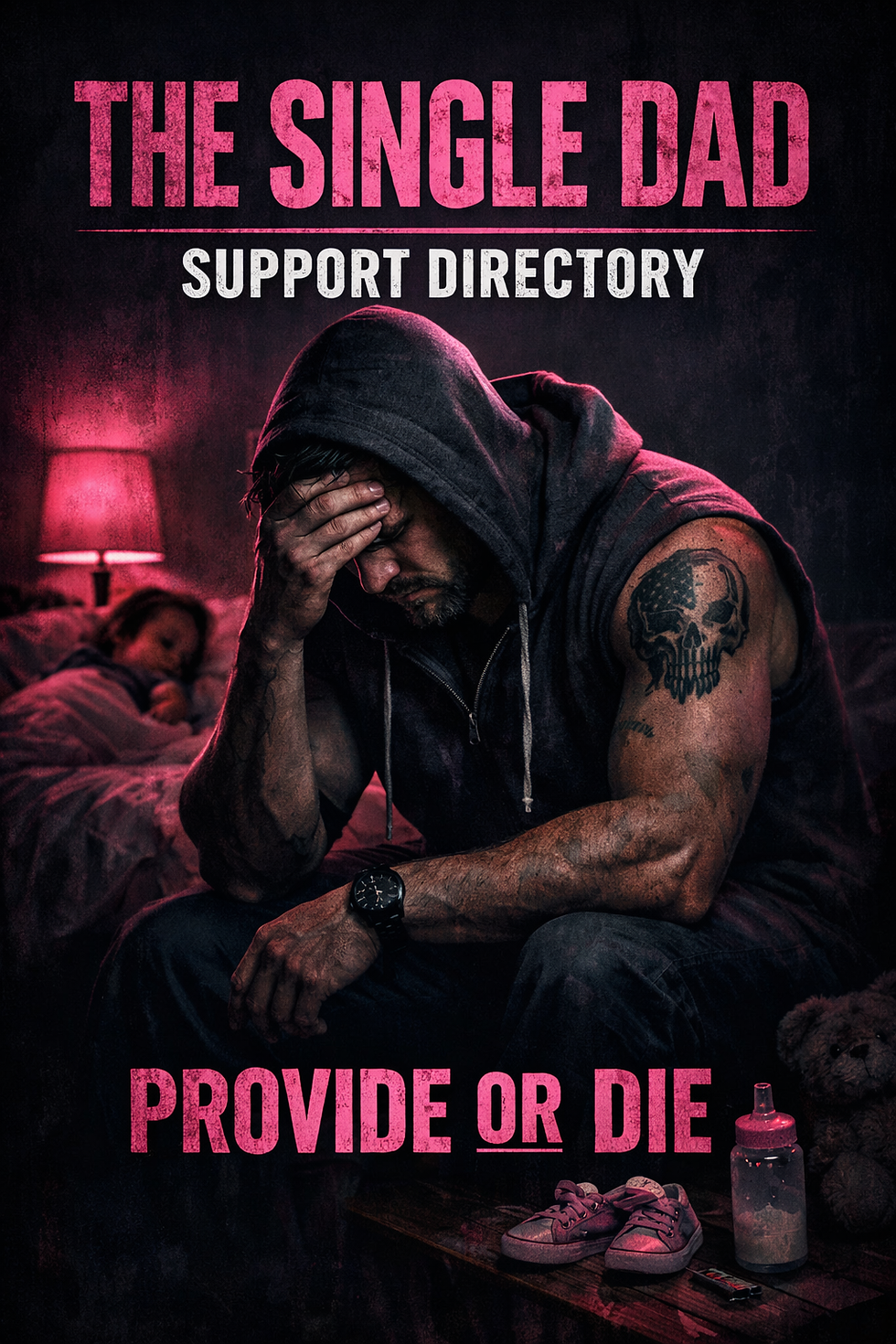
Why Provide Or Die Exists
Provide Or Die was created because too many fathers were carrying impossible burdens in silence.
Many websites offer information.
Information is valuable.
But information alone doesn't replace community.
The mission of Provide Or Die is simple:
Connect fathers with fathers.
Share practical resources.
Encourage dads who feel isolated.
Help fathers become stronger for themselves and for their children.
Whether you're thriving, barely hanging on, or somewhere in between, there is a place for you.
Some dads join because they need help.
Others join because they want to help another father.
Both are equally important.
Communities become stronger when fathers lift one another up.
Final Thoughts
If you've made it this far, here's one thing worth remembering.
The fact that you're searching for ways to become a better father already says something important about you.
It means you care.
It means you're trying.
It means your children matter to you.
There will be difficult days.
There will be victories.
There will be setbacks.
There will also be ordinary Tuesday evenings that your children remember for the rest of their lives because Dad was there.
Keep showing up.
Keep learning.
Keep growing.
Keep asking questions.
Keep believing that tomorrow can be better than today.
Your children don't need a superhero.
They need you.
Frequently Asked Questions About Single Dad Support in Texas
Where can single dads find support in Texas?
Single fathers can find support through local community organizations, churches, fatherhood groups, online communities, counseling services, and peer support networks. Many dads also benefit from connecting with other fathers who have experienced similar parenting challenges.
Are there resources specifically for single fathers in Texas?
Yes. Texas offers a variety of family services, parenting programs, workforce assistance, legal aid organizations, and community-based resources that can help fathers navigate parenting, employment, housing, and family court matters.
Is there financial assistance available for single dads in Texas?
Depending on individual circumstances, single fathers may qualify for housing assistance, food assistance, healthcare programs, childcare support, workforce development services, and other community resources designed to help families become financially stable.
How can single dads meet other fathers in Texas?
Many fathers connect through local parenting organizations, community events, churches, youth sports, online groups, volunteer opportunities, and support communities focused on fatherhood.
What are the biggest challenges facing single fathers?
Common challenges include balancing work and parenting, financial stress, custody arrangements, loneliness, burnout, dating after divorce, maintaining mental health, and finding reliable support systems.
Can single fathers experience burnout?
Absolutely.
Burnout affects many fathers who spend years balancing employment, parenting, financial responsibilities, and household management without adequate support.
Recognizing burnout early allows fathers to seek healthy solutions before stress becomes overwhelming.
How can fathers improve their mental health?
Healthy habits such as exercise, quality sleep, counseling, supportive friendships, faith communities, hobbies, and open conversations with trusted people can significantly improve emotional well-being.
How important is community for single dads?
Community can make a tremendous difference.
Knowing another father understands your challenges often reduces feelings of isolation and provides encouragement during difficult seasons.
What makes a great father?
Children rarely remember perfect parenting.
They remember love.
Consistency.
Safety.
Encouragement.
Patience.
Time together.
Being present matters far more than being perfect.
Where can I connect with other single dads in Texas?
Provide Or Die was created to help fathers find practical resources while also connecting with other dads who understand the realities of single fatherhood. Whether you're looking for encouragement, friendship, or someone who's walked a similar path, building those connections can make the journey feel much less lonely.


Comments